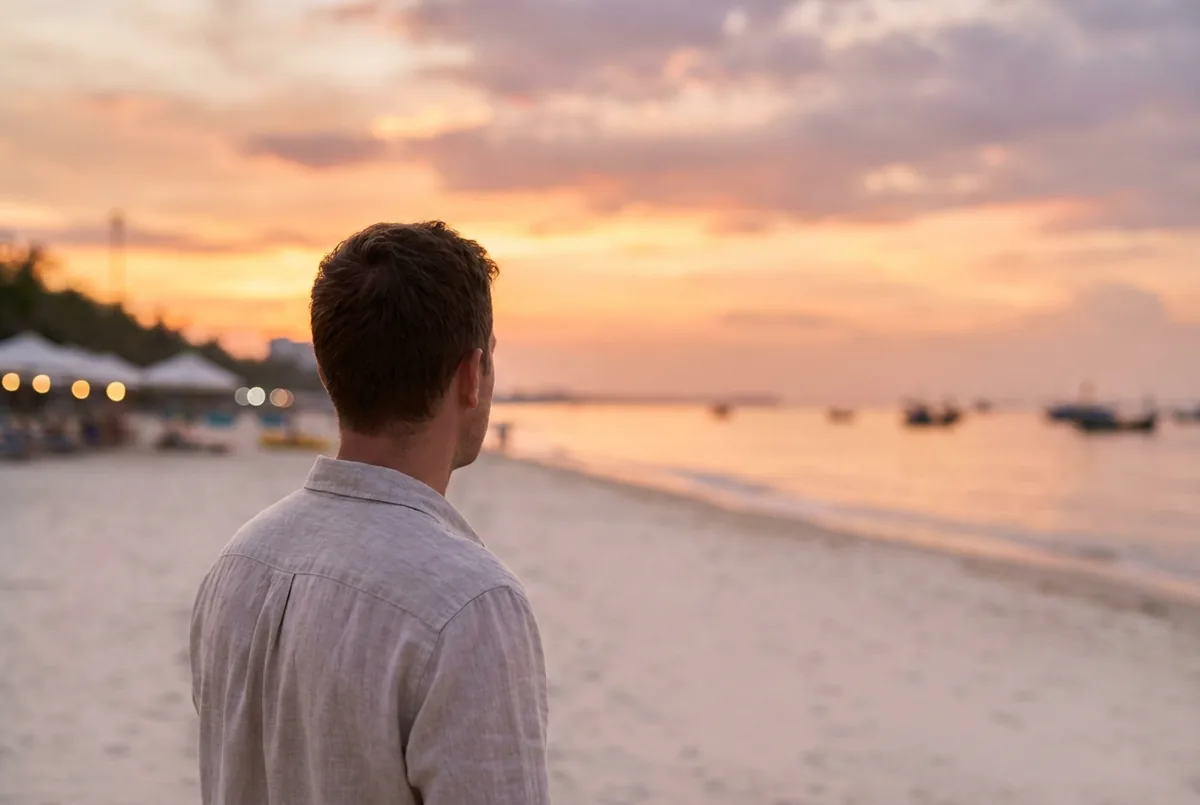
What is the Son Tra Peninsula and why is it included in the Da Nang itinerary?
The Son Tra Peninsula is a green area northeast of Da Nang that shields the bay from the open sea and forms one of the city's most recognizable views. For a traveler, this is not just a natural park, but a compact route for half a day: you leave the center, after 20-30 minutes you find yourself at the Linh Ung Pagoda, then you can climb several lookouts and go down to beaches with calmer water.
Son Tra is especially convenient because it is easy to combine with other points in Central Vietnam. In the morning you can go to the peninsula, in the afternoon you can return to Da Nang or go to the Marble Mountains, and the next day you can plan on Hoi An, which is about 30 km away, or the Hai Van Pass towards Lang Co and Hue. If you're in Da Nang for the first time, Son Tra is one of those routes where the city, sea and jungle fit into one trip without complicated logistics.
- —quick departure from the center of Da Nang without a long journey;
- —panoramas of the city, bay and South China Sea;
- —Linh Ung Pagoda and the tallest Buddha statue in the region;
- —beaches and forest areas in one route.
Linh Ung Pagoda: what to see and how to plan a visit
The main point of Son Tra for most guests is the Linh Ung Pagoda on the slope of the peninsula. People come here not only for the religious site, but also for the open panorama of Da Nang and the coast. The central landmark of the complex is a 67-meter statue of Buddha, clearly visible even from afar: it stands against the backdrop of the sea and green hills, so the shots here are very expressive without any complex preparation.
It usually takes 40–70 minutes to explore the pagoda, if you are not in a hurry and want to calmly walk around the territory, take photos and look at the sea from the observation platforms nearby. In the morning there is less heat and people, and in the afternoon you can catch soft light before sunset. If you come during the season from February to August, it is better to choose an early hour or closer to 16:30 to catch it before heavy traffic and the heat of the day.
- —do not wear closed clothes into the temple area, it is too noisy - this is a religious place;
- —take care of your camera and phone: there are sharp gusts of wind and active monkeys around;
- —take water and a hat, because there is little shade in open areas;
- —Leave plenty of time for parking and climbing around the area.
Viewpoints on Son Tra: where is the best view of Da Nang and the sea
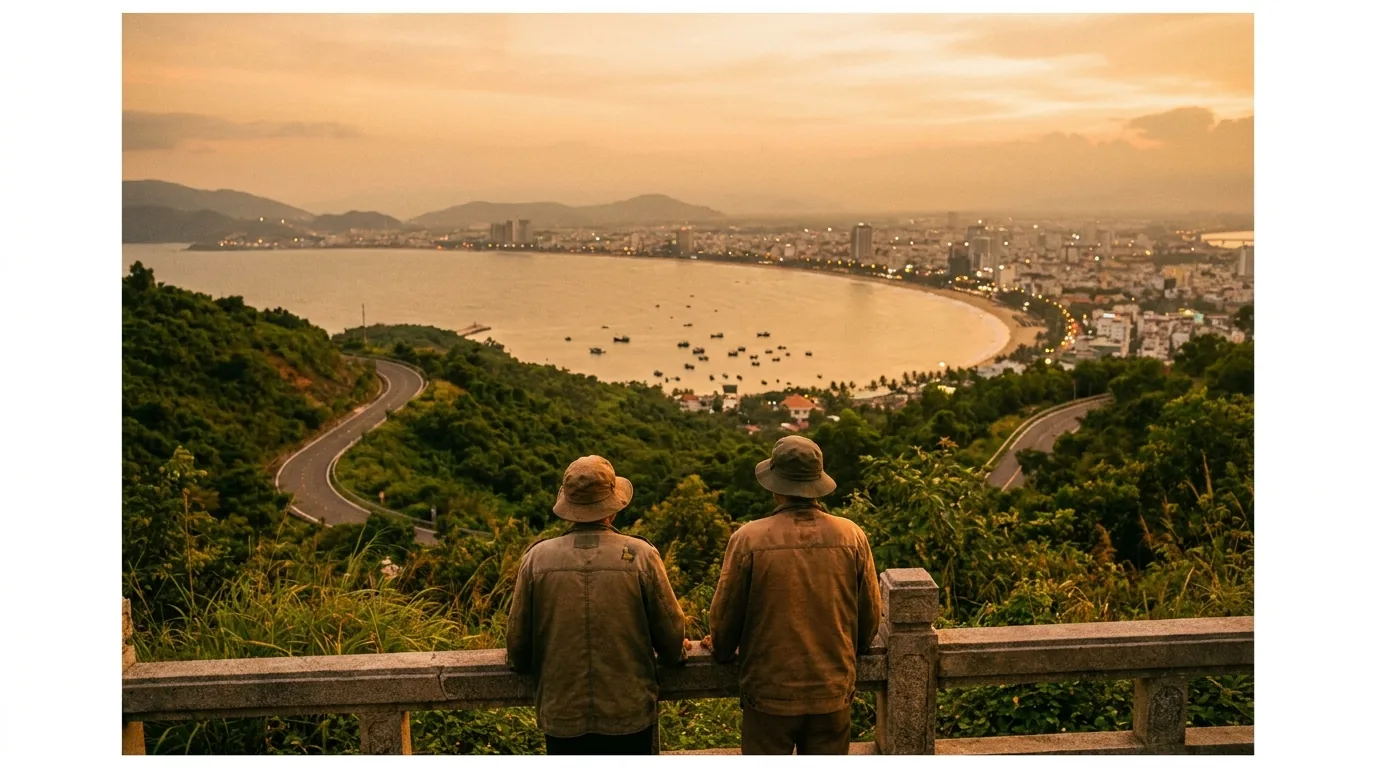
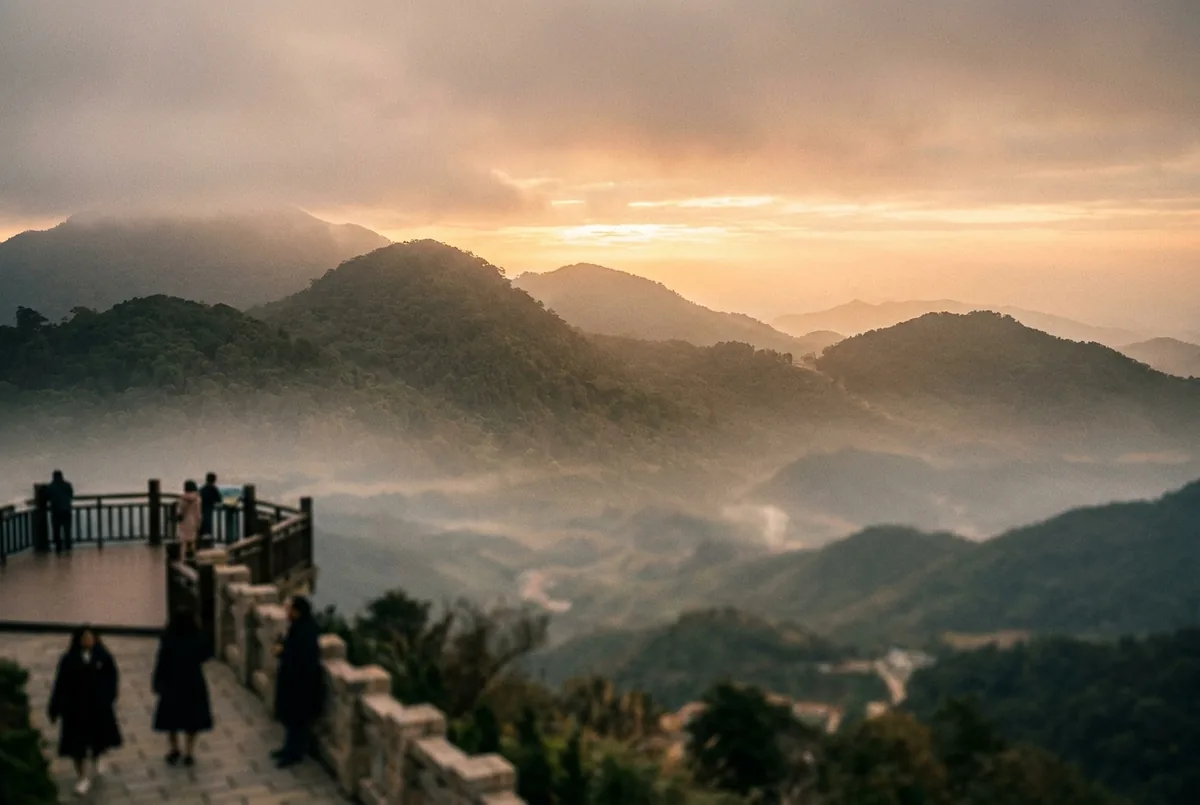
Observation points on the Son Tra Peninsula are convenient because they provide different angles: on the city high-rises and the long line of My Khe beach, on the bay and on the open sea. On a clear day, the arc of the coast is especially clearly visible, and at sunset you can catch the contrast between the warm sky and the dark green hills. This is one of the best places in Da Nang for a short photo stop without long trekking.
If you are planning a photo shoot, keep a simple rule in mind: the higher the point, the clearer the perspective, but the stronger the wind and the less amenities. People usually go to Son Tra for a hybrid “view + accessibility”, and not for a difficult hike. Places where you can see the sea, the coast and the city line at the same time are suitable for video and photography - in such a frame Da Nang looks the most complete.
- —choose a day with low clouds - during the rainy season, views are often “eaten up” by haze;
- —for sunset, arrive at least 40 minutes in advance;
- —If you take pictures with your phone, wipe the lens: at higher elevations the air is often humid;
- —Do not place a tripod in the driveway or block a narrow road.
Monkeys on Son Tra: how to behave safely
Son Tra is famous not only for its views, but also for its macaques, which live almost everywhere here: along the road, in parking lots, near lookouts and trails. They're easy to see, but it's important not to think of them as "cute street animals."Monkeys quickly get used to people, they know how to snatch food, bags and shiny objects, and they can also become aggressive if they feel that you are protecting your bag or feeding them from your hand.
The most common mistake is holding a bag of fruit, a drinking bottle without fixing it, or a phone at arm's length near monkeys. On the Son Tra Peninsula it is better to act calmly: do not provoke contact, do not show food and do not linger too close to a group of animals. If there are cubs nearby, the distance should be increased even more.
- —do not feed macaques - it is harmful to the animals and dangerous for you;
- —do not keep food in sight or leave bags open;
- —do not make sudden movements or try to touch the monkeys;
- —if the animal approaches, simply move away and put things away.
Beaches and quiet areas of Son Tra: where to go if you want water and fewer people
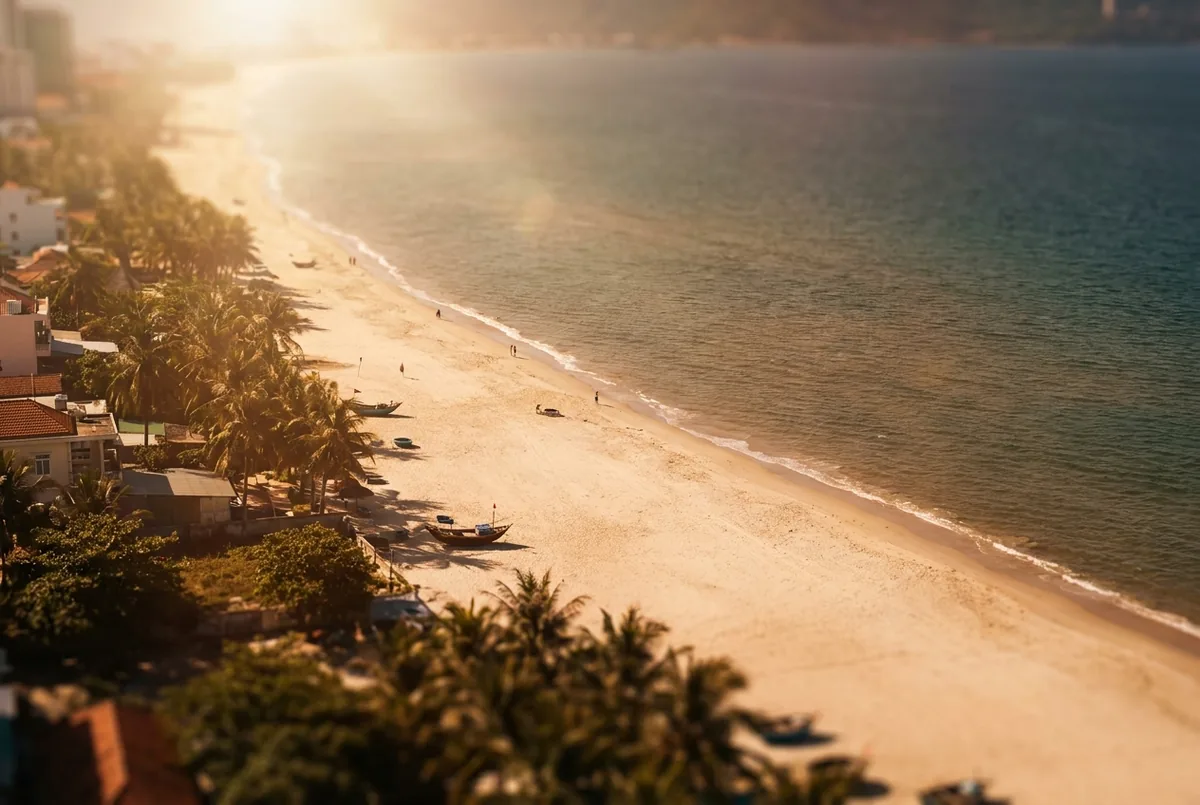
In addition to the pagoda and viewpoints, Son Tra is interesting for its beaches and quieter sections of the coast. Here the sea is perceived differently than in urban My Khe: there is more greenery nearby, less urban density and more often the feeling that you are no longer in the center of the resort, but on the edge of a natural area. For a short walk, there are places where you can walk along the shore, take a photo and return without a long descent along the paths.
If you just need a beach day, and not just a sightseeing stop, Son Tra is best combined with a morning departure and a short swim in calm weather. But for a full-fledged sunbed and infrastructure, My Khe or An Bang beaches in Hoi An are more convenient. Son Tra, on the other hand, wins in terms of atmosphere: here the water, hills and forest form a “wilder” frame than at the city embankment.
- —For a walk, choose the morning or late evening, when there is less sun;
- —after rain, some of the approaches may be slippery;
- —Plan to swim only in calm weather and in a safe area;
- —do not leave things unattended, even for a short time.
How to get to Son Tra Peninsula from Da Nang
The most convenient way to get to Son Tra from the center of Da Nang is by taxi, Grab or bike. The journey to the main points usually takes 20-30 minutes if you start from areas near the Han River or My Khe Beach. The route is clear, but there are narrow sections on the climbs and at popular viewpoints, so in high season it is better to go not during peak time, but before 9:00 or after 15:30.
If you don't rent a bike, taxis are the easiest option for a couple or family. When riding a scooter on your own, it is important to take into account descents, sharp turns and wet asphalt after a short rain. During the dry season from February to August the road is usually more comfortable, and in March to May the weather is often the smoothest with less rainfall, good visibility and less severe heat than June to August.
- —taxi/Grab is the best option for the first visit;
- —a bike is convenient if you confidently ride on mountain roads;
- —for groups you can rent a car with a driver for 3–5 hours;
- —reserve for stops and parking at the pagoda.
Best time for Son Tra: season, light and sunset
For Son Tra, not only temperature is important, but also visibility. From February to August, the peninsula is usually at its best: there is less rain, the sea is calmer, and the viewpoints often offer a clear horizon. The best months for a trip are March, April and May: at this time there is still no sweltering humid heat, and the sky often remains clear enough for panoramic shots.
It is convenient to plan sunset on Son Tra at about 17:45, but in practice the light begins to soften earlier - already from 17:15–17:30. If you want to take a walk and take pictures without backlight, arrive before 16:30. During the rainy season from September to January, the route is also possible, but then it is better to check the forecast: thick haze and downpours can completely obscure the panorama.
What to combine with Son Tra: a convenient route for half a day or a day
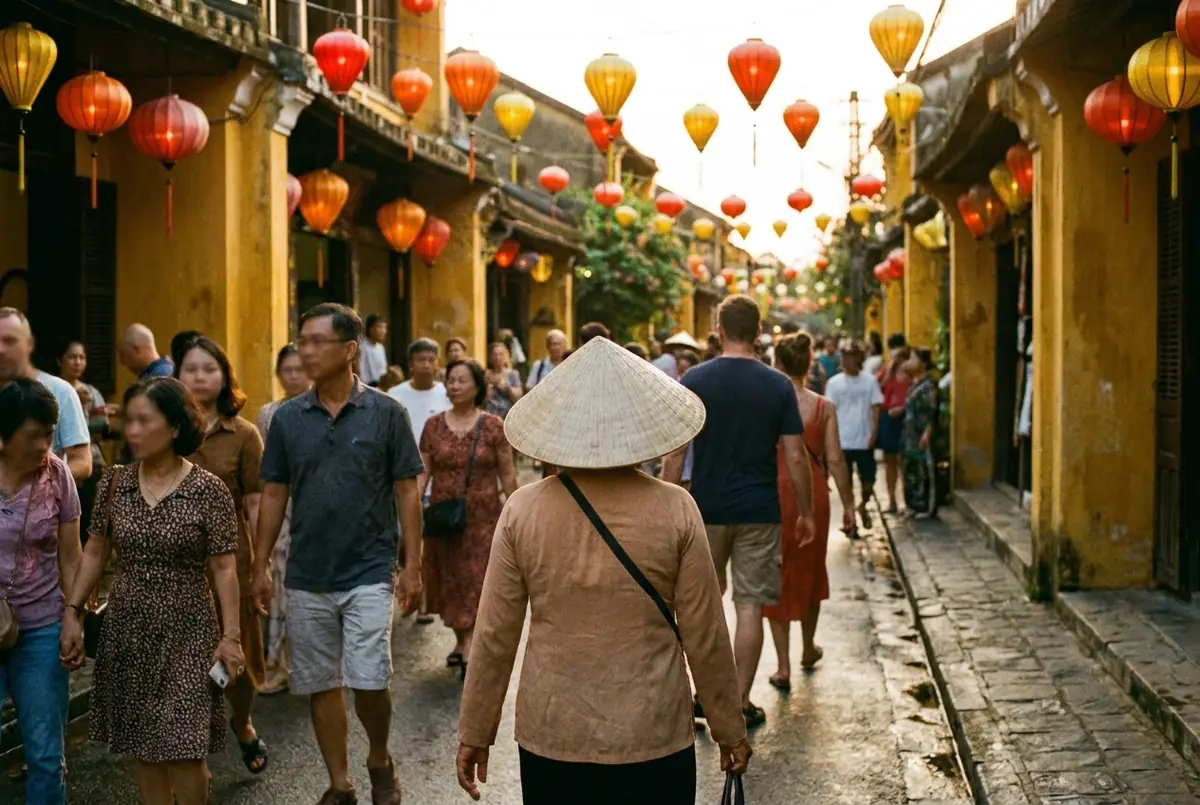
Son Tra fits comfortably into a Central Vietnam itinerary because it is very close to the city and does not require a separate day. If you live in Da Nang, it can easily be combined with My Khe Beach, the Marble Mountains or an evening stroll to the Dragon Bridge where there is a fire show on weekends. For those staying longer, a good option is to make Son Tra the first point in the morning and then drive to Hoi An to the old town and Thu Bon River.
If you want a longer trip, you can continue the route through Hai Van Pass towards Lang Co and Hue. In this case, Son Tra becomes a warm-up for the big day: you start with views of Da Nang and the sea, and then get contrast with the mountain road, lagoons and historical sites. For family or couple travel, this is more convenient than trying to fit everything into one overloaded itinerary.
- —Son Tra + My Khe beach - for a relaxing morning and photos;
- —Son Tra + Dragon Bridge - for the evening city;
- —Son Tra + Hoi An - for one busy day;
- —Son Tra + Hai Van/Hue pass - for an extended route.