When is official registration needed, not a symbolic ceremony?
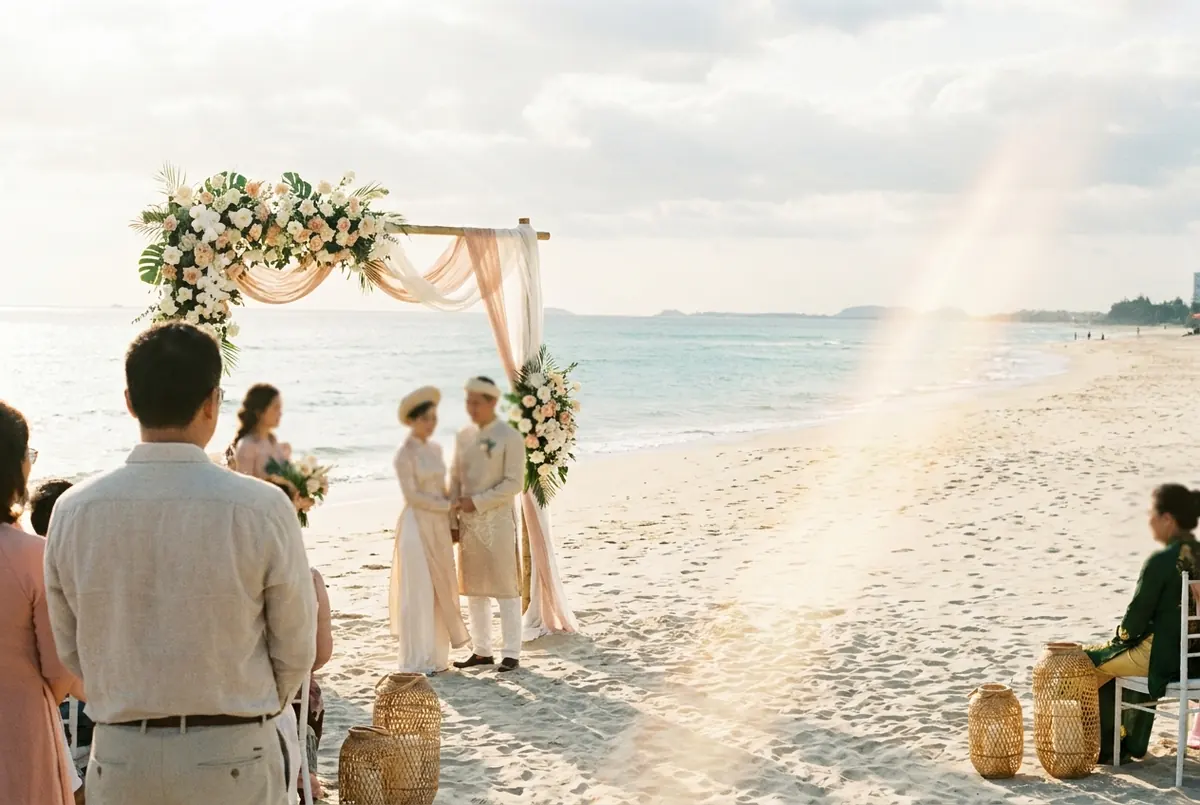
If you care about the legal status of your marriage in your country, you need an official registration. A symbolic ceremony on My Khe Beach, Non Nuoc or Old Hoi An looks beautiful, but in itself does not create family law consequences. The official procedure is recorded in a Vietnamese registry office-like body and can then be used to recognize a marriage in the Russian Federation or another CIS country after the necessary legalization.
Most often, couples come to us who need one of three scenarios: marriage with subsequent use of the document in Russia, registration for filing family issues in a third country, or formalization of a relationship when one of the spouses has already been in Vietnam for a long time. In each case, the set of documents and the route for their legalization are different, so it is better to start not by purchasing tickets, but by checking your personal situation.
- —marriage needs legal force, not just a beautiful ceremony
- —plan to use the certificate in the Russian Federation, the CIS or a third country
- —want to undergo the procedure in Da Nang without wasting time on independent visits to authorities
What documents are needed to register a marriage?
The basic package depends on citizenship, family status and where you obtain your certificates. Citizens of the Russian Federation and most CIS countries usually need international passports, birth certificates, certificates of marital status, as well as documents confirming that you are not married to another person. If there was a previous divorce, divorce documents are added;if the spouse is a widower or widow - a corresponding certificate.
Important: some of the papers must not only be translated into Vietnamese, but also legalized in advance. In practice, this means that the certificate cannot simply be printed out and brought to the local office. The correct stamps, apostille or consular legalization are required, depending on the country of issue and current requirements. We check each document in advance so as not to find out any shortcomings already in Da Nang.
- —foreign passports of both spouses
- —birth certificates
- —certificate of marital status / absence of registered marriage
- —Divorce or death papers of previous spouse, if applicable
- —notarized translations and legalization, if required

How does the procedure go step by step?
First, we check your documents using photos or scans and tell you what is missing. Then we will agree on the date of submission: in Da Nang and Hoi An, the working rhythm of the organs is not as fast as in tourist locations on the coast, so it is better to reserve time. After this, we prepare translations, create a dossier and submit it to the local authority, which reviews the application.
When registration is scheduled, the couple comes to attend in person. Usually this is a short but formal procedure: data verification, signing, issuance of a certificate. If everything is put together correctly, the final part itself takes a little time, but the preparatory stage is usually more important. An error on one certificate can delay the process for days or weeks.
We accompany the couple at all stages: from initial verification to receipt of the final document. If you arrive for 45 days without a visa, you can structure the process so as to fit within your stay and not be stuck in Vietnam longer than planned.
- —verification of documents and consultation on your case
- —preparation of translations and legalization
- —submission of the package and communication with the local authority
- —personal presence of the couple at registration
- —obtaining a certificate and recommendations for further recognition
Legalization: what to do before and after registration
Legalization is the part of the process that is most often underestimated. Before registration, it is important to correctly prepare documents from your country: if they are issued in the Russian Federation, an apostille may be required for individual certificates, then notarized translation and certification. For documents from the CIS, the rules are different: in some places an apostille is suitable, in others consular legalization is required. We check this before the start, not after arrival.
After registration, the second question arises - how to use the Vietnamese certificate at home. For Russia and a number of CIS countries, a consular or other recognition procedure provided for by law is usually required, plus translation into Russian. If a marriage is needed to be submitted to Russian authorities, it is better to immediately calculate where you will put additional marks and how long it will take for further legalization.
- —apostille or consular legalization on original documents
- —notarized translation into Vietnamese
- —obtaining a Vietnamese marriage certificate
- —translation and legalization of the certificate for use in your country
- —checking the requirements of your jurisdiction
Deadlines, costs and what affects the budget
The preparation time usually depends not on the registration itself, but on the speed of collecting documents. If you already have the correct certificates with the necessary stamps on hand, the process goes faster. If certificates need to be ordered, apostilled and sent to Da Nang, the deadlines increase. On average, it is better to allow from 2 to 6 weeks for quiet preparation, and for the registration itself - from several working days after submission until the appointed date.
The cost consists of our support services, translations, legalization, state fees and possible additional costs for courier delivery. We do not inflate the budget due to “hidden” items: we show in advance what is included in the package and what is paid separately. For couples who combine registration with a vacation in Da Nang, the budget often turns out to be noticeably lower than a similar wedding organization in Bali: in terms of overall costs, Central Vietnam is usually 30–40% more profitable.
- —deadlines depend on the readiness of the source documents
- —the most common reason for delays is an incorrect certificate of marital status
- —the budget is formed by translations, legalization, state duties and support
- —high season on the coast is March–May, so it is better to book in advance
- —during the dry season from February to August it is easier to plan a trip and delivery
Why is it convenient to get married in Da Nang?
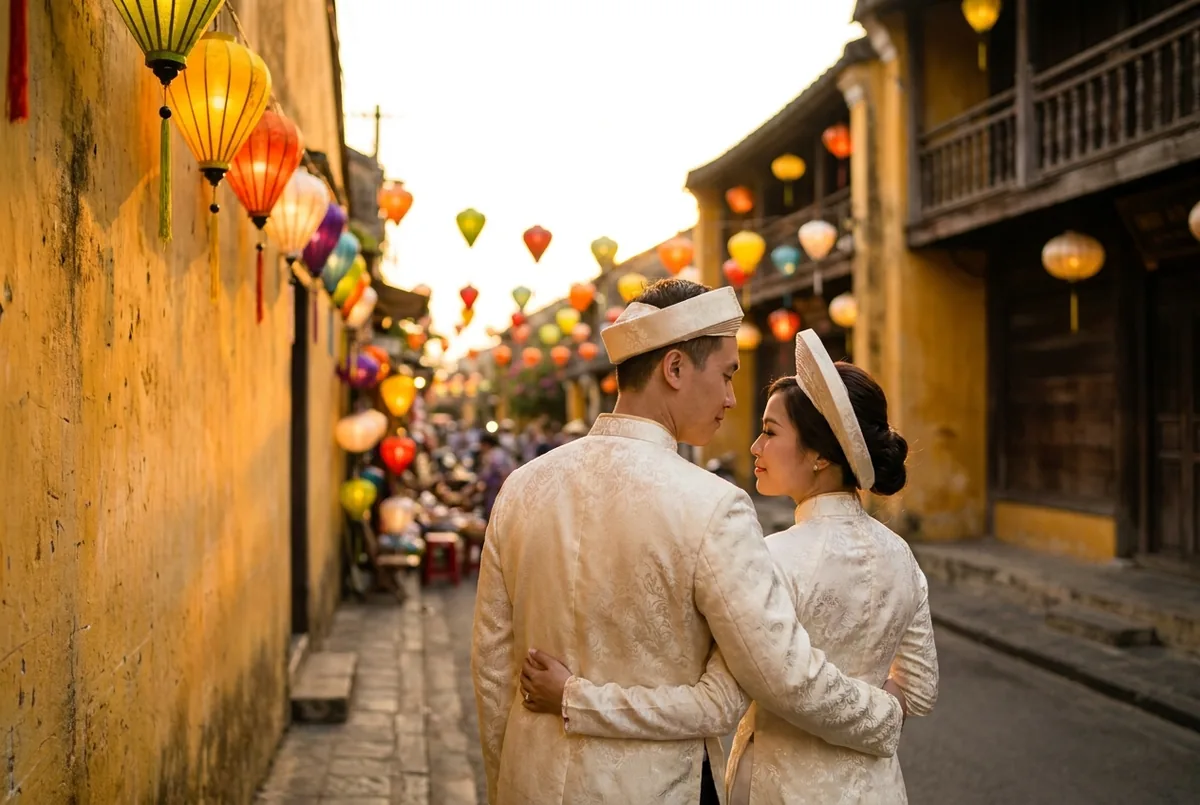
Da Nang is convenient for official registration not only as a resort, but also as a logistics point. It’s easy to combine documents and a trip here: in the morning - submission, in the afternoon - relaxation on My Khe or a walk along the Marble Mountains, in the evening - dinner on the Khan embankment. Old Hoi An with the Thu Bon River is about 30 km away, that is, about 40 minutes on the road, and this allows you not to tie the entire trip to one address.
If you want to add travel before or after check-in, there are Ba Na Hills and Golden Bridge, Son Tra Peninsula, Hai Van Pass, Imperial Heritage Hue and the long beaches of An Bang and Non Nuoc nearby. In the evening you can see the Dragon Bridge, and on weekends - its fire show. This is convenient for a couple: you resolve a legal issue and do not spend your vacation just on paperwork.
- —45 days without a visa for Russian citizens
- —short transfers between the beaches, Hoi An and registration authorities
- —mild climate during the dry season from February to August
- —the opportunity to combine documents and normal rest
- —good infrastructure for a couple who arrived for the first time

| Stage | What do we do | What does the couple do |
|---|---|---|
| Document verification | We analyze the package, indicate what is missing, and provide a list for your country | Send scans/photos and answer clarifying questions |
| Preparation | We organize translations, help with legalization, create a dossier | Complete the missing papers and arrive in Da Nang |
| Submission | We submit the package and support communication with the local authority | Sign the required forms in person |
| Registration | We accompany you on the day of the procedure and check the issuance of documents | Both of you attend registration |
| After registration | We advise on further recognition and translation of the certificate | Use the document where required |