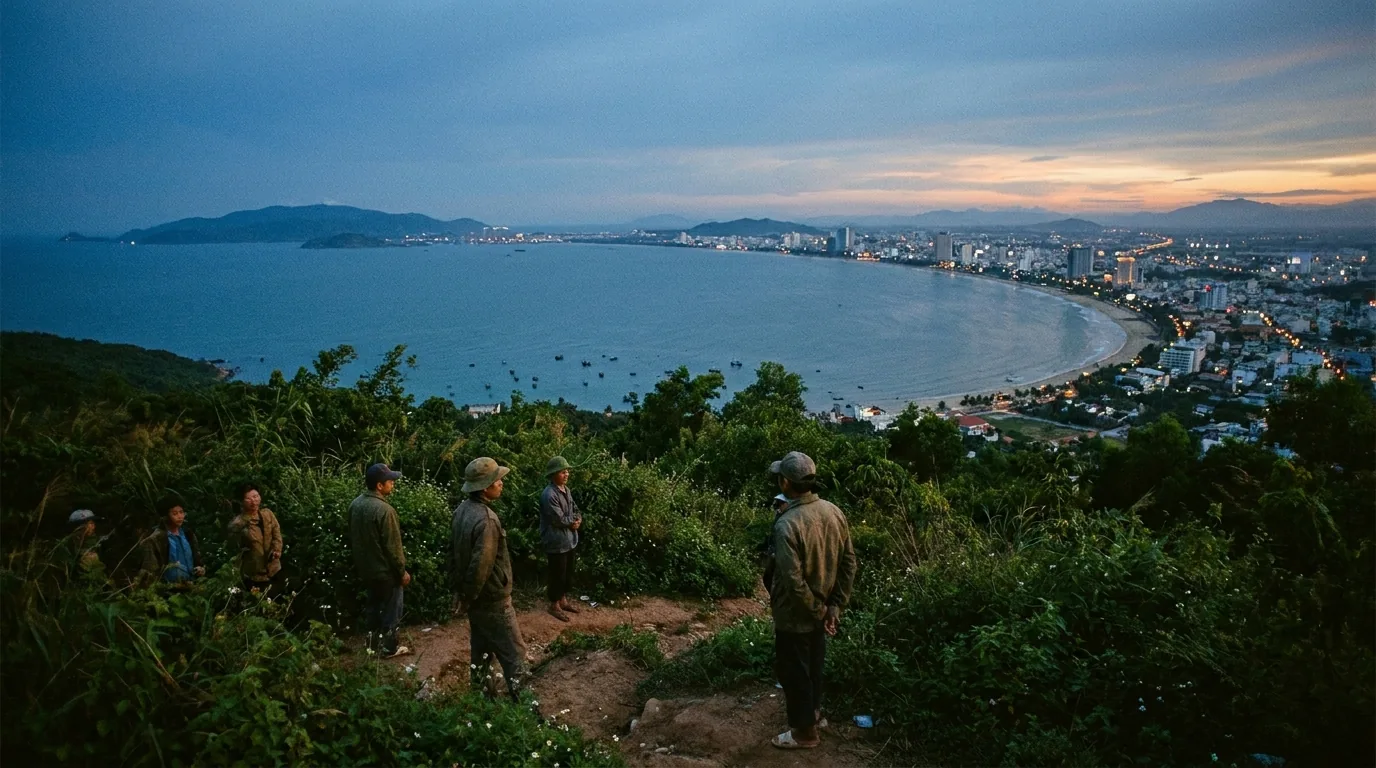
Why Da Nang is convenient for weddings and filming
Da Nang is convenient because within a radius of 40–90 minutes you get several different visual scenarios: the beach, mountains, old town, bridges, panoramas and green roads. For the film crew, this means less travel, less time wasted changing sets, and more predictability in terms of lighting. For a couple or event organizer, this is also a budget saver: many locations are free or cost significantly less than on popular island destinations.
The climate also plays into our hands. The best season for filming and events in Da Nang is the dry months from February to August, and the most comfortable windows in terms of light and temperature usually occur in March–May. Sunset is on average around 17:45, so it is better to plan evening ceremonies, filming on the beach and content with golden light in advance and start moving to the location no later than 1.5–2 hours before sunset.
The entry regime is also important for Russian guests: for citizens of the Russian Federation there is a visa-free period of 45 days, which simplifies the organization of wedding trips, intimate events and film crews. An additional advantage of Da Nang is that the price for services and venues here is often 30–40% lower than in Bali, with a comparable level of views and service.
- —many different locations within short distances
- —dry season from February to August and best light in spring
- —visa-free 45 days for citizens of the Russian Federation
- —prices are lower than in Bali, on average by 30–40%
My Khe, Non Nuoc and An Bang beaches: if you need air, horizon and a clean line
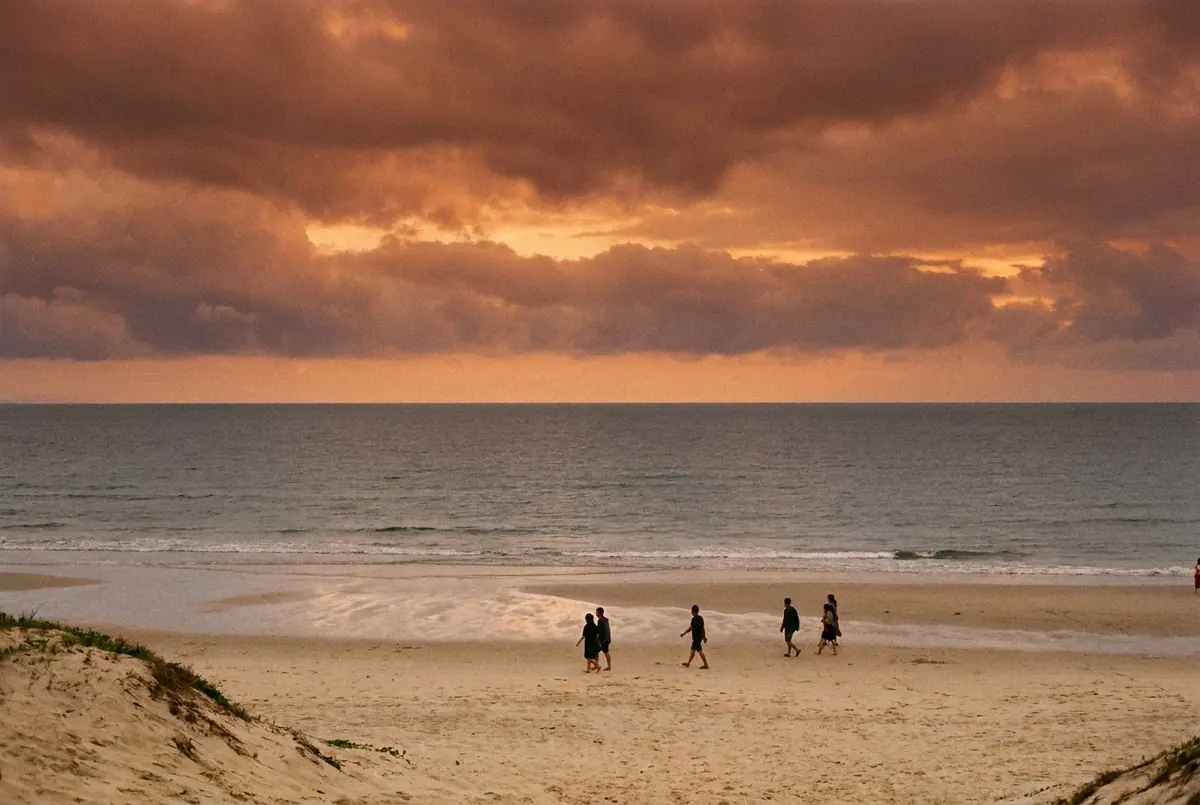
Beach locations are the first choice for a wedding ceremony by the sea, morning photography and fashion content. My Khe is Da Nang's most famous beach: a wide line of sand, a long vista, soft light at dawn and easy access for the crew. Shots with a minimalist set, an arch, textiles and lively movements near the water work well here. Non Nuoc is a quieter option south of the center, near the Marble Mountains;it is convenient if you want a less dense beach environment and a quick transition to the next point.
An Bang is closer to Hoi An and is suitable for those who want to combine the sea and the old town in one day. This is a convenient location for photographing a couple at dawn, then moving to Hoi An to see historical architecture and an evening shot on the Thu Bon River embankment. Beaches also work for events, but in practice it is better to choose early hours: there are fewer people, the risk of harsh sun is lower and it is easier to achieve a clear picture without random passers-by in the frame.
If you want a beach wedding, consider wind and humidity. On the open beach, textiles, lightweight structures and floristry require more durable fasteners than in the city or in a villa. On My Khe and Non Nuoc it is especially important to allow time for assembly and have a Plan B in case of strong winds or high waves.
- —My Khe is the best choice for a wide beach shot and sunrise
- —Non Nuoc - quieter and more convenient in connection with the Marble Mountains
- —An Bang - good for the beach + Hoi An route in one day
- —early morning is better than midday: fewer people and softer light
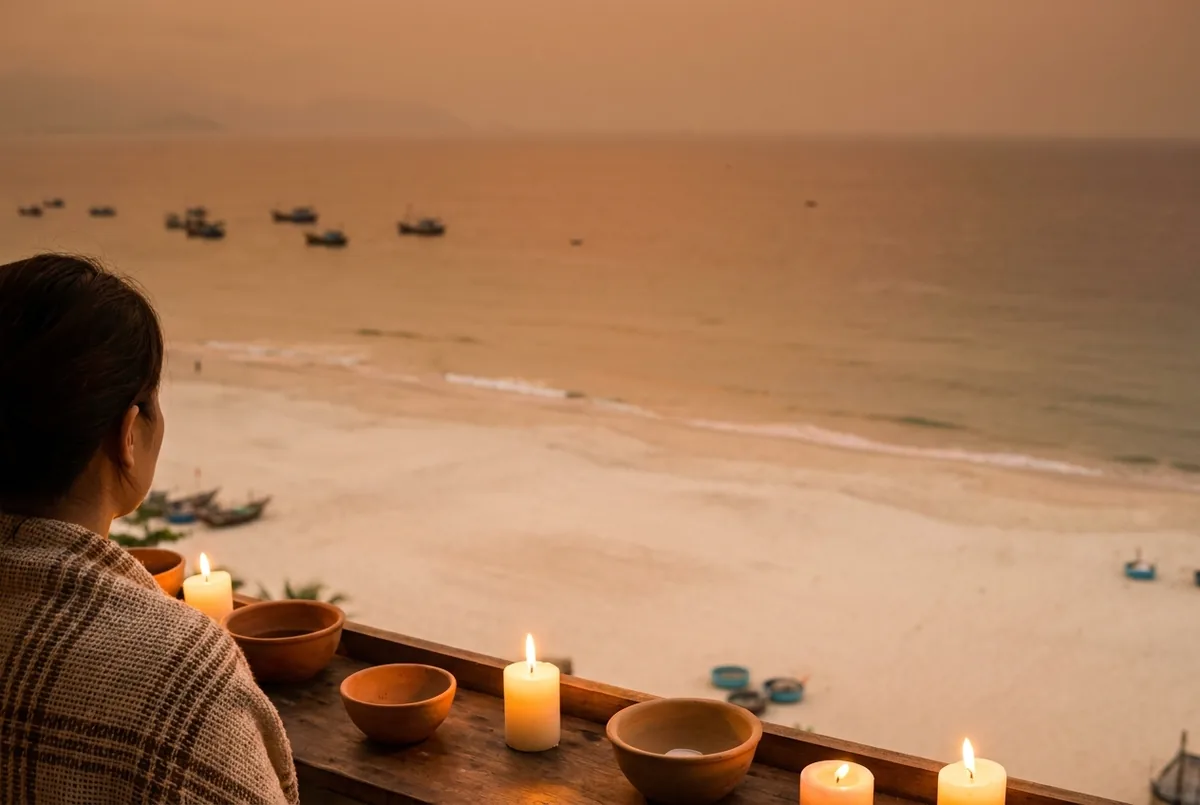
Son Tra and Marble Mountains: greenery, heights and panoramas without a long climb
The Son Tra Peninsula is one of the strongest locations for nature and road shots. There are views of the sea, bends of serpentines, dense greenery and a feeling of solitude, although it’s not far from the city. For love stories, pre-wedding and branding shoots, Son Tra is good because it provides different terrain within one route: you can shoot a road, a forest, a viewpoint and the sea horizon without a complex expedition.
The Marble Mountains are a more compact, but very textured area. This is a good choice if you want stone, stairs, Buddhist architecture, cave vaults and strong texture in the frame. For filming and small private ceremonies, the location is interesting precisely because of the variety of angles: the same visit allows you to get a completely different picture - from dramatic to calm.
Both locations are best used in the morning. On Son Tra, closer to noon it can be too bright and contrasty, and on the Marble Mountains, the flow of tourists increases during the daytime, especially in the dry season. If your goal is to film without making too much noise, plan to start early and keep the route short: Son Tra separately, Marble Mountains separately or in conjunction with a nearby beach.
- —Son Tra - greenery, serpentine roads and sea views
- —Marble Mountains - stone, caves, stairs and architecture
- —the best time is early morning
- —For privacy, it’s better not to place these dots in the middle of the day
Hoi An and the Thu Bon River: the old town as a ready-made scenery
Old Hoi An is about 30 km from Da Nang and the journey usually takes about 40 minutes without heavy traffic. This is one of the most versatile locations for events and filming: narrow streets with lanterns, yellow facades, wooden doors, cafes by the water and the Thu Bon River, which provides a calm reflective surface and good evening light. If you want a "ready-to-go" visual without complicated decor, Hoi An almost always wins.
Intimate formats are especially suitable for weddings here: morning gatherings in a villa, daytime shooting in the old town and evening dinner by the river or in the garden. Hoi An is convenient for brand content days because in one area you can shoot several styles at once - from European-Asian architecture to a more lively street scene. But you need to take into account the tourist load: during peak hours the center becomes dense, and if privacy is important to you, it is better to rent before 9:00 or after 16:30.
Hoi An is especially good in the dry season, when the risk of rain is minimal and you can safely build a route around several points. If the script includes shots on a boat or near water, it is worth checking the river level and sunset time in advance so as not to lose light while moving.
- —Hoi An - 30 km and about 40 minutes from Da Nang
- —Thu Bon River is suitable for calm evening shots
- —The best window for privacy is before 9:00 and after 16:30
- —ideal for the “shooting + dinner + walk” scenario
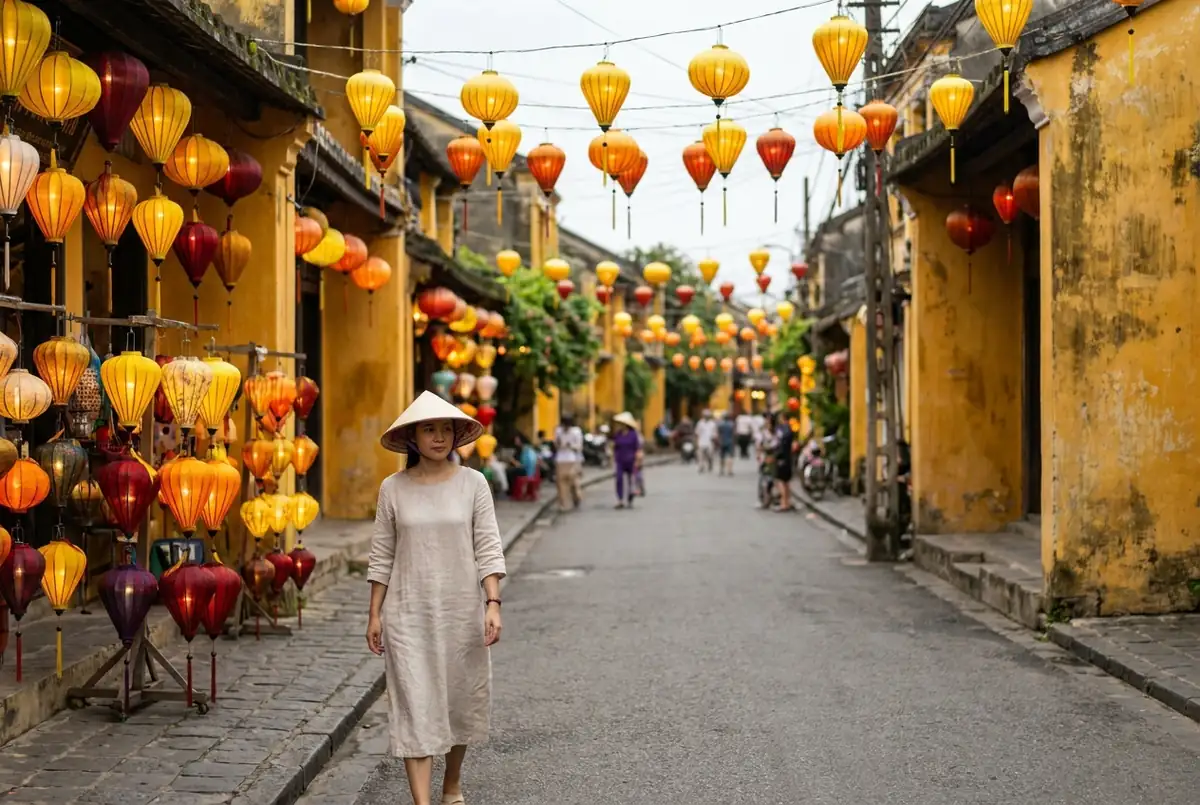
Ba Na Hills and Golden Bridge: for a spectacular picture and a strong visual accent
Ba Na Hills is a location that is chosen not for its versatility, but for its effect. The Golden Bridge, European stylization, heights, fog and changing weather provide shots that are immediately recognizable. For wedding photography, this works if you need an emphasis on scale, symbolism and unusual scenography. For event filming, Ba Na Hills is suitable as part of a program or as a separate content block, especially if you need to show travel, premium quality and variety of locations in one day.
But this point has limitations. There is a higher tourist flow here than on the beach or in the forest area, and the weather can change faster than in the city. The morning is usually more comfortable: fewer people, less chance of dense fog, easier to work with light. If you are planning a ceremony or filming on the Golden Bridge, it is important to make provisions for logistics and understand that this location requires strict timing.
In practice, Ba Na Hills is better used as one of 2-3 points on the route, and not as the only one. A good plan is to get up in the morning, take a short shoot on the bridge, then descend to Da Nang or drive to Hoi An for a more relaxing end to the day.
- —Golden Bridge - a strong visual accent for wedding photography
- —It's better to go in the morning because of the people and the weather
- —suitable for a scenario with one bright main shot
- —convenient as part of a multipoint route
Hai Van Pass and route to Hue: for road, scale and cinematic movement
Hai Van Pass is a location for those who need not just a background, but movement and scale. The serpentine, sea views, mountain slopes and long road lines make it a strong location for fashion shoots, cars, pre-wedding and video clips. Dynamic shots work well here: approaching, driving, stopping at a vantage point, then changing the shot to a panorama.
If you have a shooting day in Hue, Hai Van can be built in as a connecting visual segment. Hue is interesting for its calmer historical atmosphere, palaces and river, but the route itself already provides the necessary drama. This is convenient for production: one road turns into a full-fledged part of the story, and not just a transfer.
It is important to consider safety and time. At the pass, you shouldn’t count on a chaotic schedule: you need stops in permitted places, a normal driver, a supply of water and a clear light plan. Haivan is best photographed in the morning or late in the day, when the sun is not high and the contrast does not cut into the picture.
- —Haivan is a location about the road and scale
- —suitable for video, auto-shooting and dynamic shots
- —the best time is morning or late afternoon
- —on the route to Hue it turns into a part of history, not a transfer
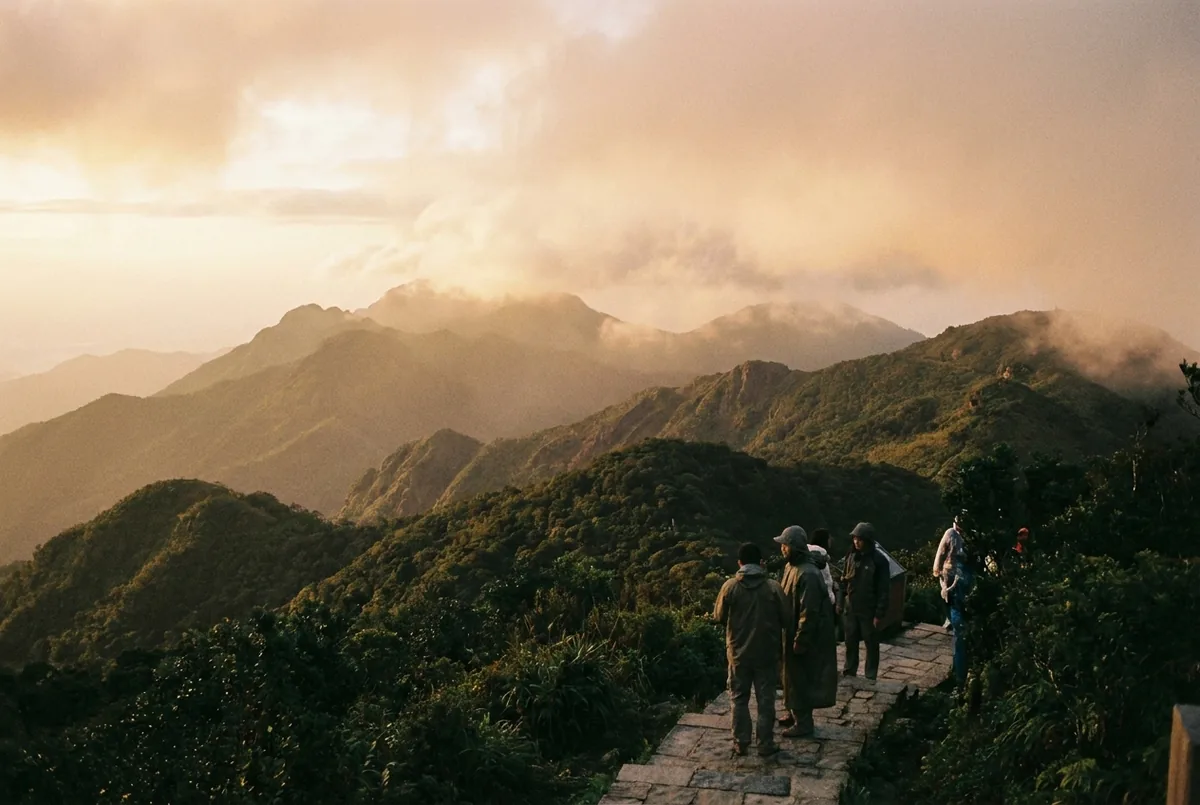
How to choose a location for a task: wedding, event, love story, brand
If the task is a wedding ceremony, first of all look at privacy, wind load and the ability to quickly move guests into the shade or into the hall. Beach villas and garden areas in Non Nuoc and Hoi An with an evening dinner are most often suitable for an intimate wedding. If you want a big visual gesture, you can add Ba Na Hills or Marble Mountains as a couple's location and have the ceremony in a quieter area.
For events and corporate formats, the logic is different: entrance, parking, access to electricity, sound and the scenario for the movement of guests are important. Beaches and open views are beautiful, but they are not always suitable for stage, catering and technology. Here, closed sites by the sea, villas, resorts and combined routes often benefit, where part of the program takes place in one place, and content filming in another location.
For brands and content shoots, the best approach is to build a route based on the type of image. You need airiness and a clean background - choose My Khe or An-Bang. We need a texture - Marble Mountains. Need history and color - Hoi An. We need dynamics and status - Haivan and Ba Na Hills. In a good production, one location does not cover the entire day: in Da Nang this is not a problem because the distances are short.
- —wedding - privacy, wind, access to shade and hall
- —event - logistics, sound, parking, food
- —brand photography - choose a location based on the type of image
- —in Da Nang it’s possible to combine 2–4 points in one day
Planning practice: time, light and route
The most common mistake is to set up a beautiful location without taking into account the light. In Da Nang, morning shooting is almost always more stable: fewer people, lower temperatures, softer shadows. In the evening it is convenient to work on the beach and in Hoi An, but it is important to arrive early for sunset, because after 17:00 time goes by very quickly, and there is almost no time left for traveling between points.
If you have a shooting day, don't try to take in everything at once. The optimal route usually includes one main location and one additional location: My Khe + Hoi An, Marble Mountains + Non Nuoc, Son Tra + beach, Ba Na Hills + evening Hoi An. This way you keep the pace, don't overwhelm the couple or guests, and get a more cohesive visual story.
Household items are also important for the organization: water, replacement shoes, air-conditioned transport, napkins for humid climates, a plan in case of rain during the transition period. Even in the dry season, brief cloudiness and humidity can change the feel of the shot, so it’s better to have some extra time and a thoughtful call sheet on site.
- —morning - more stable for most locations
- —plan to arrive at sunset in advance, especially on the beach
- —do not overload day 3-4 with heavy travel
- —keep a backup plan in case of wind or rain
| Location | Better suited for | Best time |
|---|---|---|
| My Khe | beach weddings, love story, sunrise photography | dawn, early morning |
| Non Nuoc | calm ceremonies by the sea, connected with the Marble Mountains | morning and late afternoon |
| An Bang | beach + Hoi An in one route | dawn, before noon |
| Son Tra | green panoramas, road, private shots | morning |
| Marble Mountains | texture, architecture, caves | morning, first half of the day |
| Hoi An | weddings, brand content, evening walks | before 9:00 and after 16:30 |
| Ba Na Hills | spectacular wedding shots, premium content | early morning |
| Haivan | video, auto-shooting, road and scale | morning or late afternoon |