What does a Vietnamese wedding consist of?
In Vietnam, a wedding has historically centered around two families, not just the couple. Even if the celebration takes place in a modern format - in a villa in Da Nang, in a hotel near My Khe beach or in a garden near Hoi An - the basis is still recognition of the union, respect for parents and wishes for future well-being. That is why many rituals are associated with the exchange of offerings, the worship of ancestors and the official introduction of relatives.
A classic Vietnamese wedding is usually divided into several stages: the engagement party, the groom's family visiting the bride, the tea ceremony, ancestor worship, the main ceremony and the banquet. In real life, not all families follow the entire cycle to the letter, but the key elements are retained. For a foreign couple, this is good news: you can take only those details that will organically fit into your scenario.
If you look at a Vietnamese wedding through the eyes of a guest, it seems very beautiful and calm: a lot of red and gold, neat symbols, gifts in envelopes, family speeches, joint toasts. But for locals it is also an important sign of respect for tradition. Therefore, when preparing, it is better not to copy the “Vietnam” decor superficially, but to understand what exactly you are showing through each element.
- —strong emphasis on family and older relatives
- —symbolic gifts and exchange of offerings between clans
- —tea ceremony and respect for ancestors
- —red color as a sign of happiness, prosperity and protection
Engagement and matchmaking: why do we need gifts and red boxes?
One of the most recognizable Vietnamese wedding rituals is lễ ăn hỏi, that is, engagement with an official visit from the groom's family. On this day, the groom's relatives come to the bride's family with gift trays or boxes. The number of sets is often odd or symbolic, and the gifts themselves are selected taking into account local traditions and the status of families. Inside there may be fruits, sweets, tea, alcohol, cakes, jewelry and other signs of respect.
The main point is not in the cost of gifts, but in the intention. This is a demonstration of the seriousness of the union, readiness for responsibility and respect for the bride’s family. Red ribbons, bows and boxes are used for a reason: the color red in Vietnam is associated with good luck, joy and prosperity. Even if you are doing a symbolic version of the ceremony for a foreign wedding, the red and gold presentation works best precisely because it is read instantly.
For a wedding in Da Nang, this element can be adapted very beautifully: hold a short ceremonial welcome before off-site registration, give symbolic gifts to parents, decorate a table with fruit and tea, use traditional trays as part of the photo shoot scenario. This adds depth to the holiday and makes the photos not just “Asian-style”, but in a truly Vietnamese context.
- —gift trays or boxes with ribbons
- —tea, fruits, sweets and symbolic treats
- —official acquaintance of families and consent to marriage
- —photo shoot with an emphasis on red and gold colors
Tea ceremony: the most important ritual for a family wedding
The tea ceremony in Vietnam is one of the most appropriate and touching elements that can easily be included in your wedding even without strictly following all the rules. During the ceremony, the newlyweds serve tea to their parents and older relatives, who in return give blessings and sometimes symbolic gifts. Everything here is built on respect: the couple thanks the families for their upbringing, and the families officially accept the new union.
Unlike a noisy banquet, the tea ceremony is calm and intimate. That is why it is loved by couples who want to preserve the personal meaning of the wedding, and not just a pretty picture. In Da Nang, such a ritual is especially convenient to carry out in the morning or afternoon, while the weather is milder and the light is better for photography. During the dry season from February to August, especially in March-May, this can be done on an open terrace, in the hotel garden or in a private villa by the sea.
For a foreign couple, it is important to understand the logic of the arrangement in advance. The elders sit higher in status and receive tea first;newlyweds usually stand or bow as a sign of respect;the speech should not be long and pretentious. It is better if the host or coordinator explains the procedure to the guests so that the ceremony looks natural, and not like an awkward stop between a photo shoot and dinner.
- —tea is served first to older family members
- —couple receives blessings and wishes for happiness
- —the ritual works well in a chamber format
- —it is convenient to spend it in the open areas of Da Nang during the day
Ao Dai and a wedding suit: what a Vietnamese couple looks like
Ao Dai is not just a national costume, but one of the most beautiful wedding images of a Vietnamese couple. For the bride, it is usually made from thick or flowing fabric, fits the figure and emphasizes the silhouette without unnecessary pretentiousness. For the groom, ao dai can also be formal: most often in deep colors with embroidery or contrasting trim. The colors often used at weddings are red, burgundy, gold, white and cream.
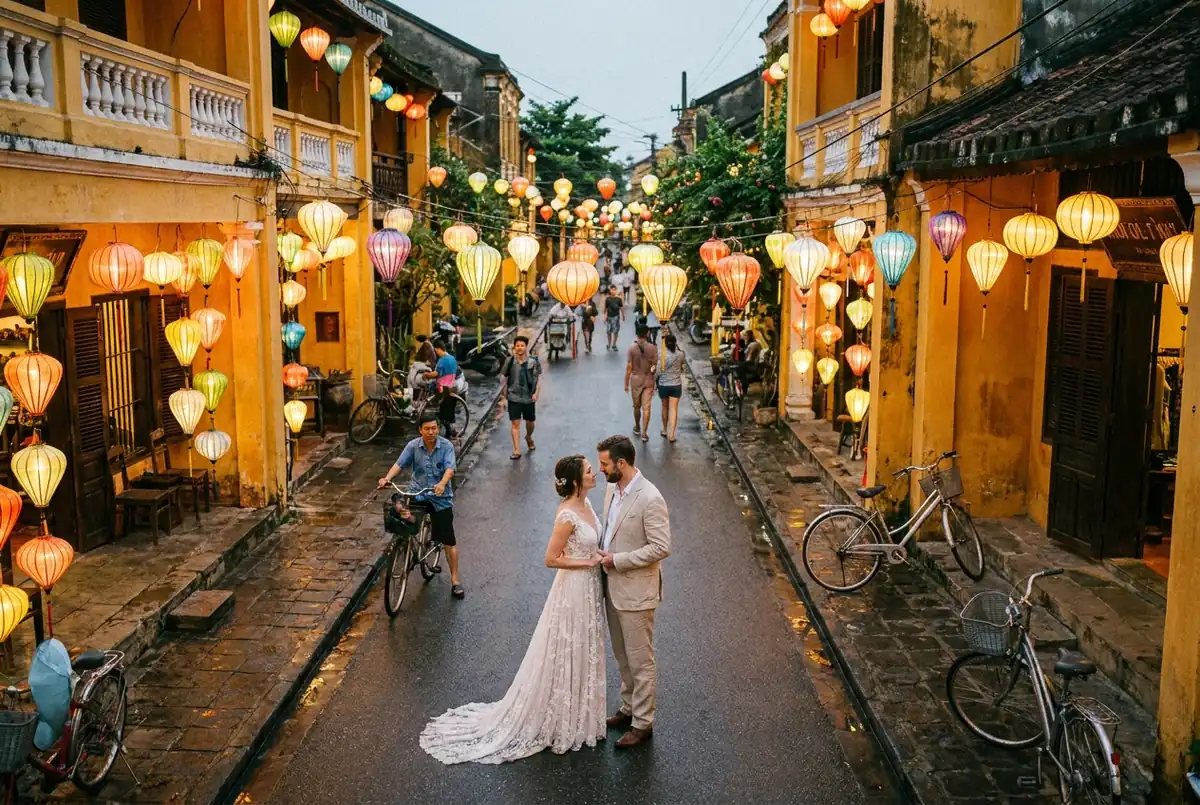
In wedding aesthetics, ao dai works especially well against the backdrop of Vietnamese locations. Old Hoi An with its lanterns, narrow streets and Thu Bon River, Marble Mountains, traditional courtyards and terraces by the ocean give a very correct texture. Against the backdrop of such places, Aozai does not look like a costume, he looks like part of the environment. Therefore, many couples do at least one filming or ceremonial part in the national costume, and then change into a more familiar European look.
If you want to use ao dai in your wedding, it is important not to overload the image with unnecessary details. It is better to choose a high-quality cut, the right length, comfortable shoes and accessories that do not conflict with the suit. This is especially important for a photo shoot in Da Nang and Hoi An: there is a lot of movement, transitions between sites and humid sea air, which means that the clothes should look beautiful and at the same time remain practical.
- —for the bride - graceful silhouette, long lines, textured fabric
- —for the groom - ao dai in dark or rich colors
- —best locations: Hoi An, beaches, garden areas, villa courtyards
- —often ao dai is used only for part of the ceremony or filming
The symbolism of flowers, dishes and gifts at a Vietnamese wedding
In Vietnamese wedding tradition, almost every element means something. Red color is happiness, good luck and protection from failure. Gold - wealth and prosperity. White may be seen as a neutral in some family contexts, but in wedding decor it is usually toned down with warmer tones to maintain a festive feel. This is why many Vietnamese weddings look bright, but not flashy: the palette sets the right emotional tone.
There is also symbolism in the treats. Fruits are served not only as part of the table, but also as a sign of abundance. Tea is a symbol of respect and peace in the family. Sweets and cakes are associated with good wishes and general prosperity. Even the choice of colors and shapes of trays can be significant: round shapes are read as a symbol of completeness and harmony, and paired items as a sign of union.
If you're planning to incorporate Vietnamese influences into your own wedding, you don't have to do everything literally. It is enough to take the right codes: red and gold accent, tea table, seasonal fruits, floral arrangements that refer to local tradition. In Da Nang, this is easy to implement without extra costs: prices for organizing here are on average 30–40% lower than in Bali, while the quality of the venues and service is very high.
- —red - luck, joy, protection
- —gold - prosperity and stability
- —tea - respect and family harmony
- —fruits - abundance and good wishes
What traditions are really beautiful to include in a wedding in Vietnam?
Not every couple wants to completely copy a local ritual, and that's okay. Practice shows that the elements that work best in a European-Vietnamese wedding are those that give meaning and look good on camera: a short tea ceremony, going out to ao dai, presenting symbolic gifts to parents, red and gold decor and a joint blessing ceremony. These details can be easily incorporated into the script without overwhelming your guests with explanations.
A very successful format is to divide the wedding into two parts. First, spend an intimate traditional block with family and loved ones, and then a more free dinner or evening by the sea. In Da Nang, it is convenient to use sites near My Khe or Non Nuoc beaches for this, and if you want the atmosphere of the old city, you can do a separate shoot in Hoi An, which is about 30 km away and about 40 minutes on the road. This way you will get both the Vietnamese texture and a comfortable rhythm of the day.
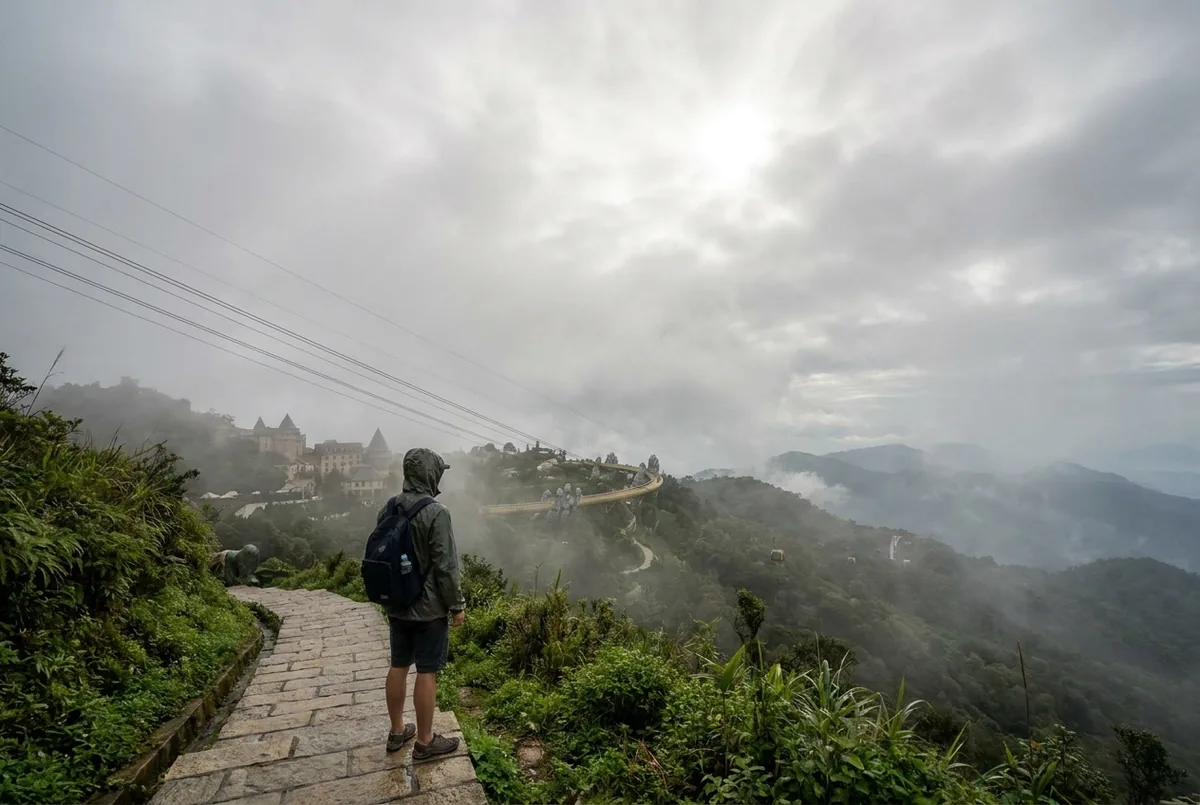
If you want to add even more local character, you can use not only the decor, but also the couple's route. For example, an outdoor ceremony against the backdrop of the Son Tra Peninsula, evening shots at the Dragon Bridge, sunset photography near the sea, or a short pre-wedding day in Ba Na Hills with the Golden Bridge. The main thing is not to mix everything, but to choose one main visual code and stick with it until the end.
- —tea ceremony with parents
- —ao dai for a couple or at least for part of the program
- —symbolic red trays and gifts
- —short family portion, then dinner or party
How not to distort tradition: ethics and common mistakes
The most common mistake is to use Vietnamese wedding elements only as decoration. When the tea ceremony turns into a quick ritual “for show”, ao dai is worn without understanding the context, and red boxes are placed for the sake of photography, the tradition loses its meaning. For local families, this may seem disrespectful, especially if the wedding is involving Vietnamese relatives or partners.
The second mistake is copying too literally without adapting it to your situation. For example, a complex multi-step ceremony may be appropriate for a large local family, but will be difficult and drawn-out for an international wedding with guests from different countries. Here you need flexibility: keep the key point, but remove unnecessary actions that do not work in your format.
The third mistake is not taking into account the local rhythm and climate. In Da Nang, the strong wedding season is during the dry months, and the best light for ceremonies and photos is usually before sunset, which here is around 5:45 pm. If you stage a long family ritual on a hot afternoon, the guests will be tired and the footage will lose quality. Therefore, in practice, it is better to build timing in advance, rather than hope that everything will “work out on its own.”
- —don't use tradition just as decoration
- —do not overload the ceremony with unnecessary actions
- —take into account climate, light and program duration
- —respectfully explain to guests the meaning of each ritual
Where traditional wedding elements look especially good in Vietnam
Locations where there is a combination of nature, light and local architecture are especially suitable for Vietnamese wedding traditions. Da Nang is convenient because you can spend the whole day here without long journeys: in the morning - a ceremony, in the afternoon - filming by the sea, in the evening - dinner overlooking the city lights. My Khe, Non Nuoc and An Bang beaches provide a tranquil backdrop for ao dai and family shots, while the Marble Mountains and Son Tra Peninsula add texture and depth.
If you like the atmosphere of old Vietnam, Hoi An is one of the strongest options. The narrow streets, lanterns, wooden houses and Thu Bon River create a very natural scene for a tea ceremony, ao dai portraits and a couple's evening walk. For a single wedding day, this is one of the most photogenic spots in Central Vietnam. And if you want to add scale, you can go further - to Hue or through the Hai Van Pass, where the landscapes become especially expressive.
At the same time, Vietnam is also convenient logistically. Visa-free entry is available for citizens of the Russian Federation for up to 45 days, so you can plan a wedding or honeymoon without complicated visa procedures. This makes the country a practical option for a couple who wants to combine tradition, sea and beautiful photography in one trip.
- —Da Nang - for a ceremony by the sea and convenient logistics
- —Hoi An - for authentic atmosphere and ao dai
- —Marble Mountains and Son Tra - for expressive wedding shots
- —Hue and Hai Van Pass - for more dramatic routes